
Grupo Goes to Olympia: Immigrant & Refugee Advocacy Day
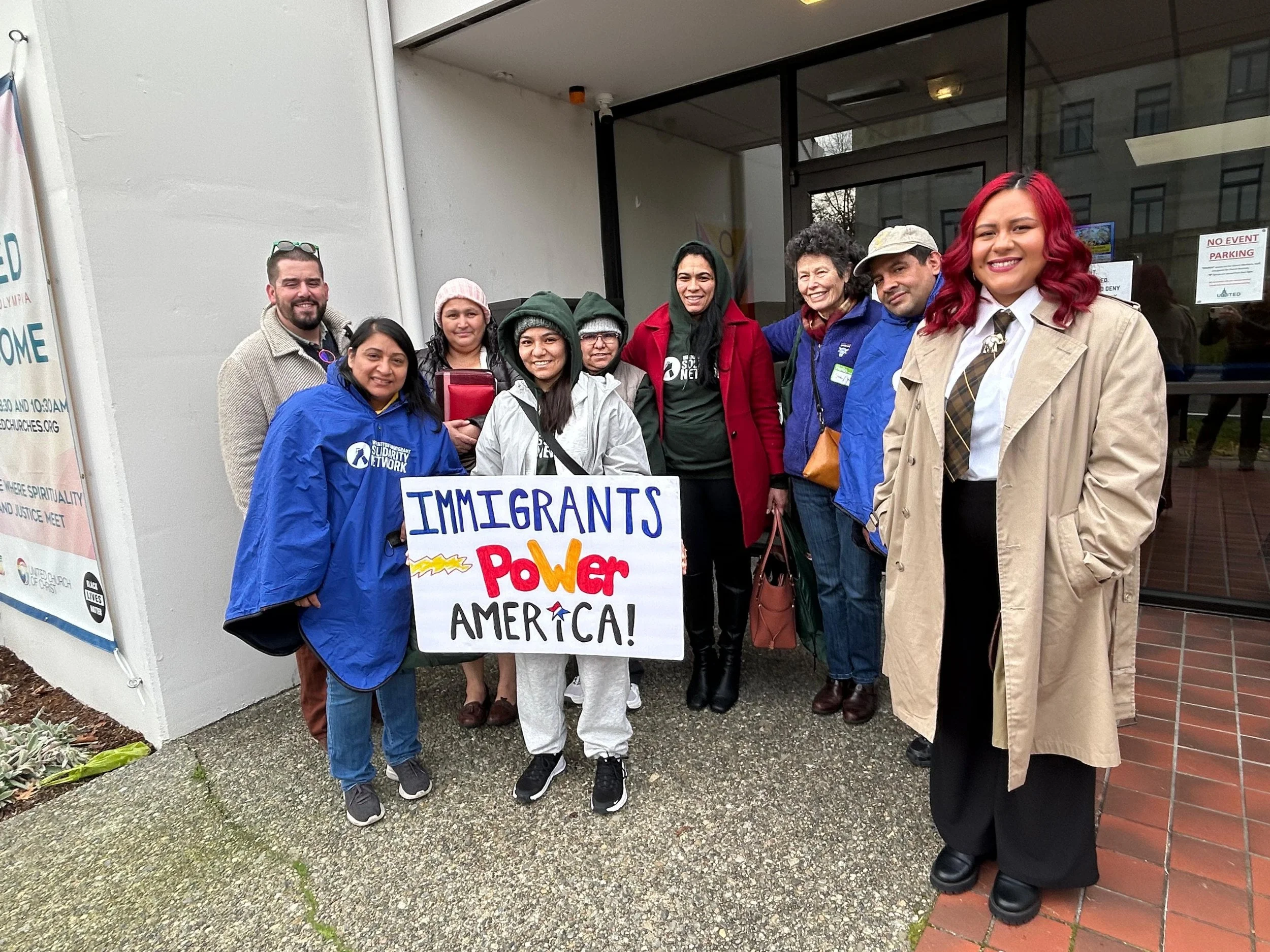
On January 22, 11 members of the Church Council of Greater Seattle’s Grupo de Solidaridad attended the 9th annual Immigrant and Refugee Advocacy Day, organized by the Washington Immigrant Solidarity Network (WAISN). We went to Olympia, filled with emotion and determination. We all knew this was an important day, an opportunity for our voices to be heard where it matters most.
We advocated for WAISN’s policy platform:
1. Continue advancing health equity for immigrants through funding for Apple Health Expansion.
2. Seek investment for the WAISN Deportation Defense Hotline.
3. Advance immigrant justice legislation which aims to protect our communities from the federal mass deportation agenda.
When we arrived at the Capitol, hundreds of other advocates were already gathering. The rally was powerful. Families held signs, some handmade by children. Chants of "¡Sí se puede!" echoed on the Capitol steps. People shared their stories about the fear of family separation, about losing jobs with nowhere to turn, about having to choose between rent and healthcare. As Ernesto Oliva, a campaign manager for WAISN said during the rally, "This isn't just politics. This is a parent getting healthcare, a worker calling for help, a family staying together."
Our members then met with legislators, including Senator Javier Valdez from the 46th District. The 20-minute meeting was focused and powerful. We had interpretation devices so our members could speak in Spanish and be heard clearly in English. Senator Valdez was attentive and receptive while our members shared their own experiences.
Our members talked about the need for unemployment insurance for undocumented workers, sharing what it's like to work seasonally without any safety net during the off months. They pushed for expanded access to healthcare for immigrants, describing how they postpone doctor's visits because they can't afford coverage. They emphasized the urgent need for cost-of-living assistance, especially housing support, as rising rents are pushing families out of their homes. Every issue resonated deeply. You could feel it in the room.
Other Grupo members also met with their own district representatives during the day, having similar conversations and pushing for the same changes.
By the time we got back to the van to return home, everyone felt empowered. We had shown up. We had made ourselves visible. We had spoken truth to power in our own voices, in our own way. IRAD reminded us why this work matters. When immigrant and refugee communities organize, when we build collective power, when we refuse to remain silent, change becomes possible. This is what solidarity looks like. This is Grupo de Solidaridad in action.