
Seattle Budget Roundtable
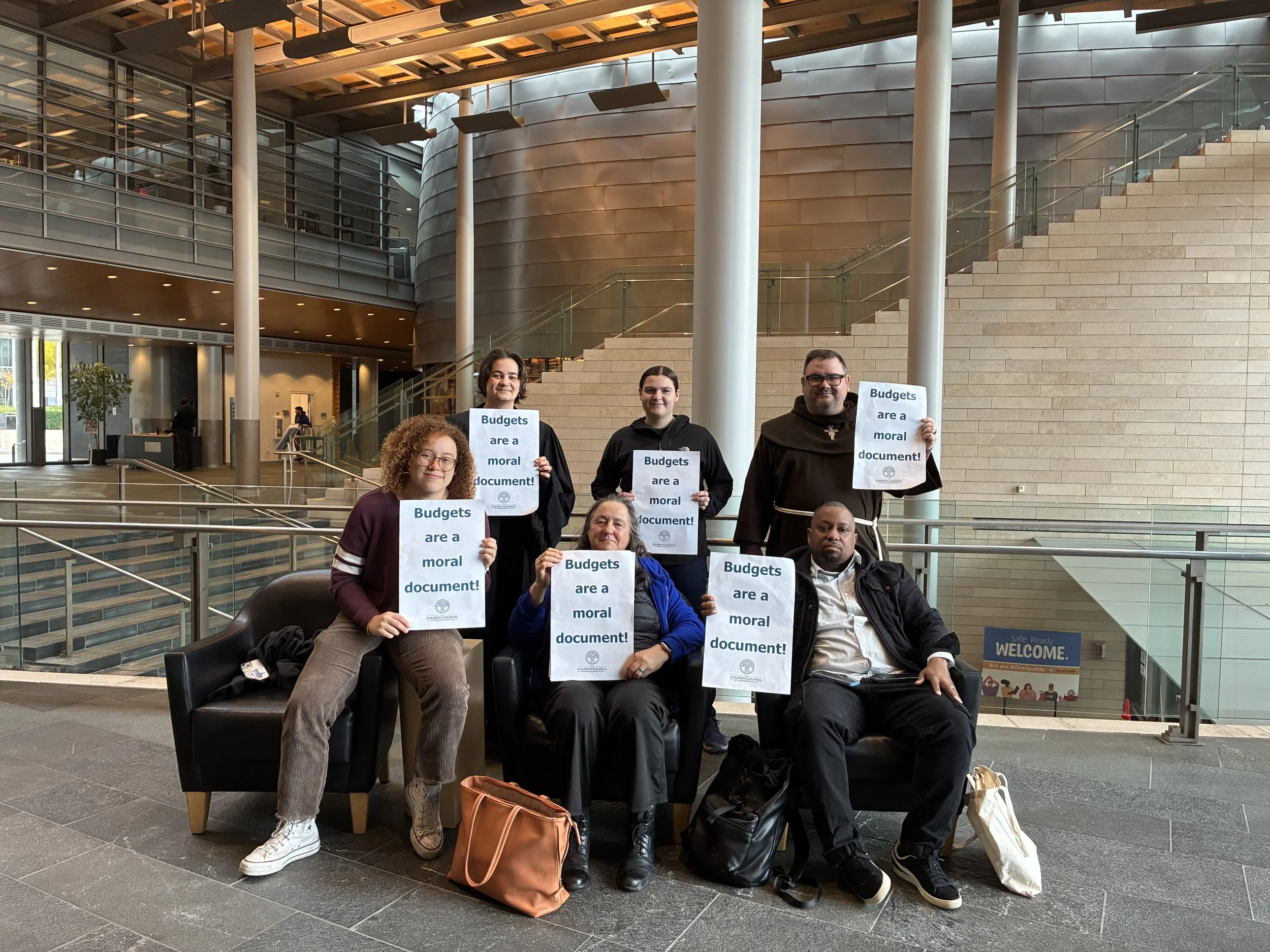
Since 2024, the Church Council has brought a dedicated presence to the Seattle City Budget Cycle, advocating for a budget that funds community care, rather than punishment.
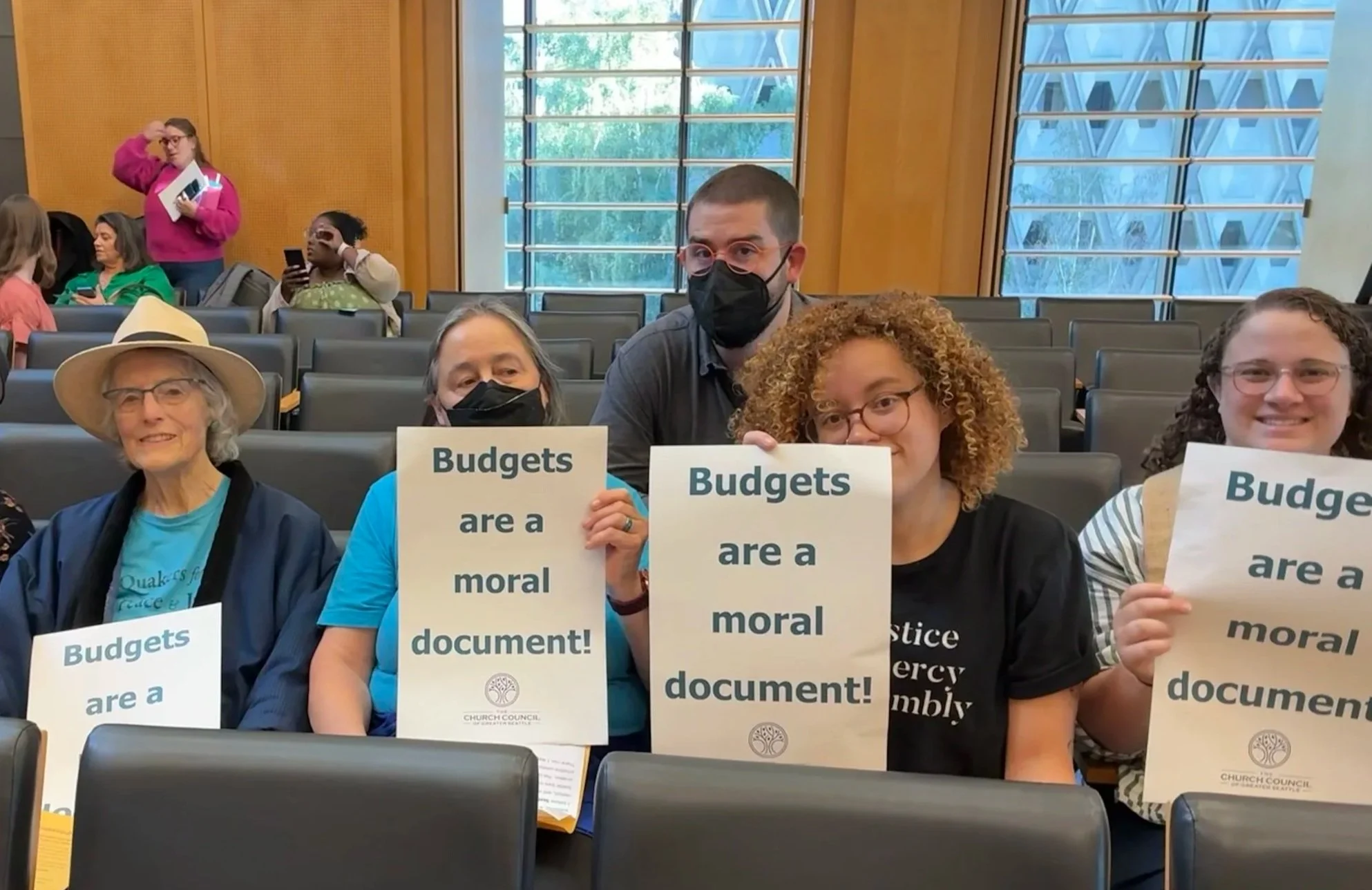
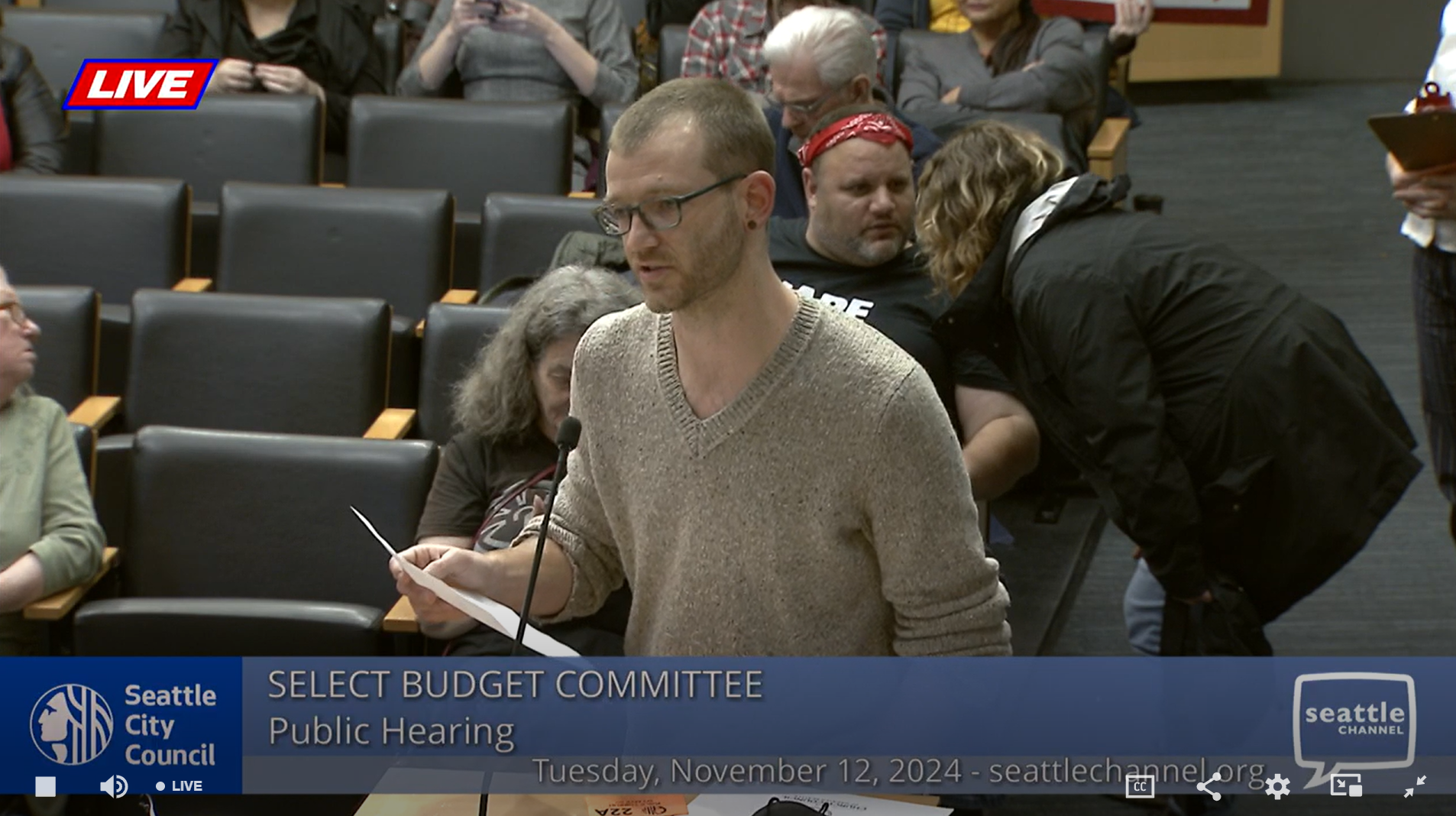
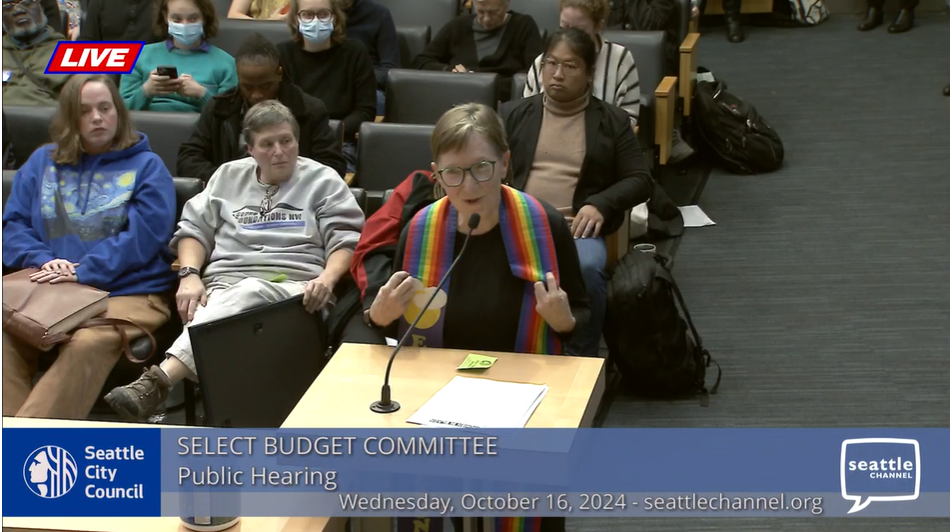
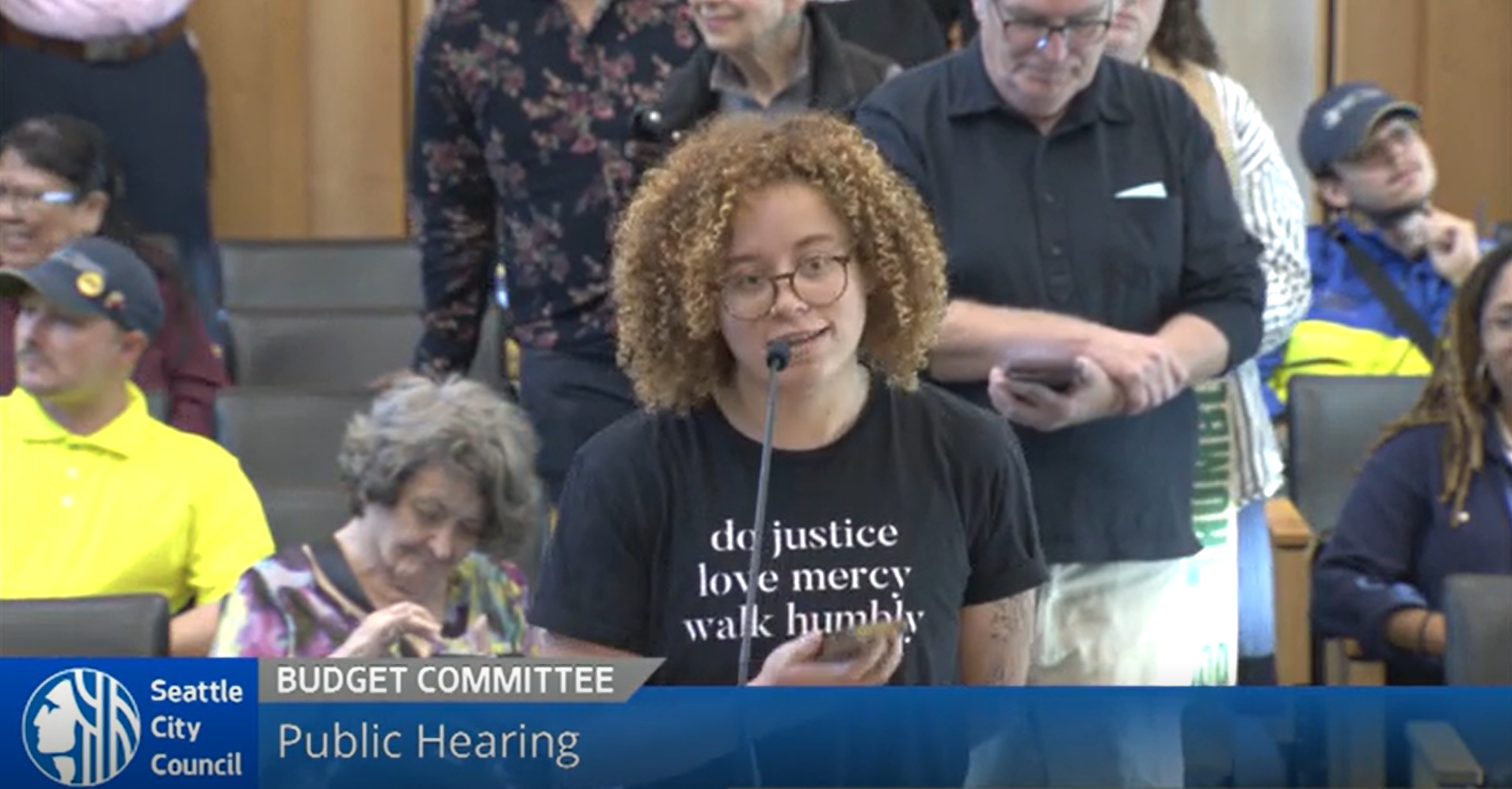
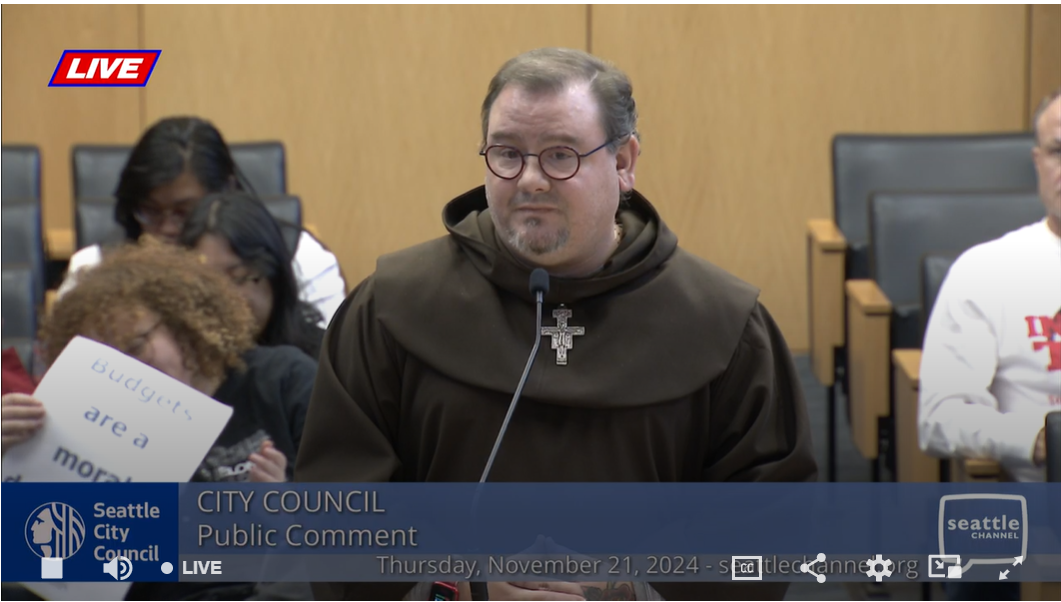
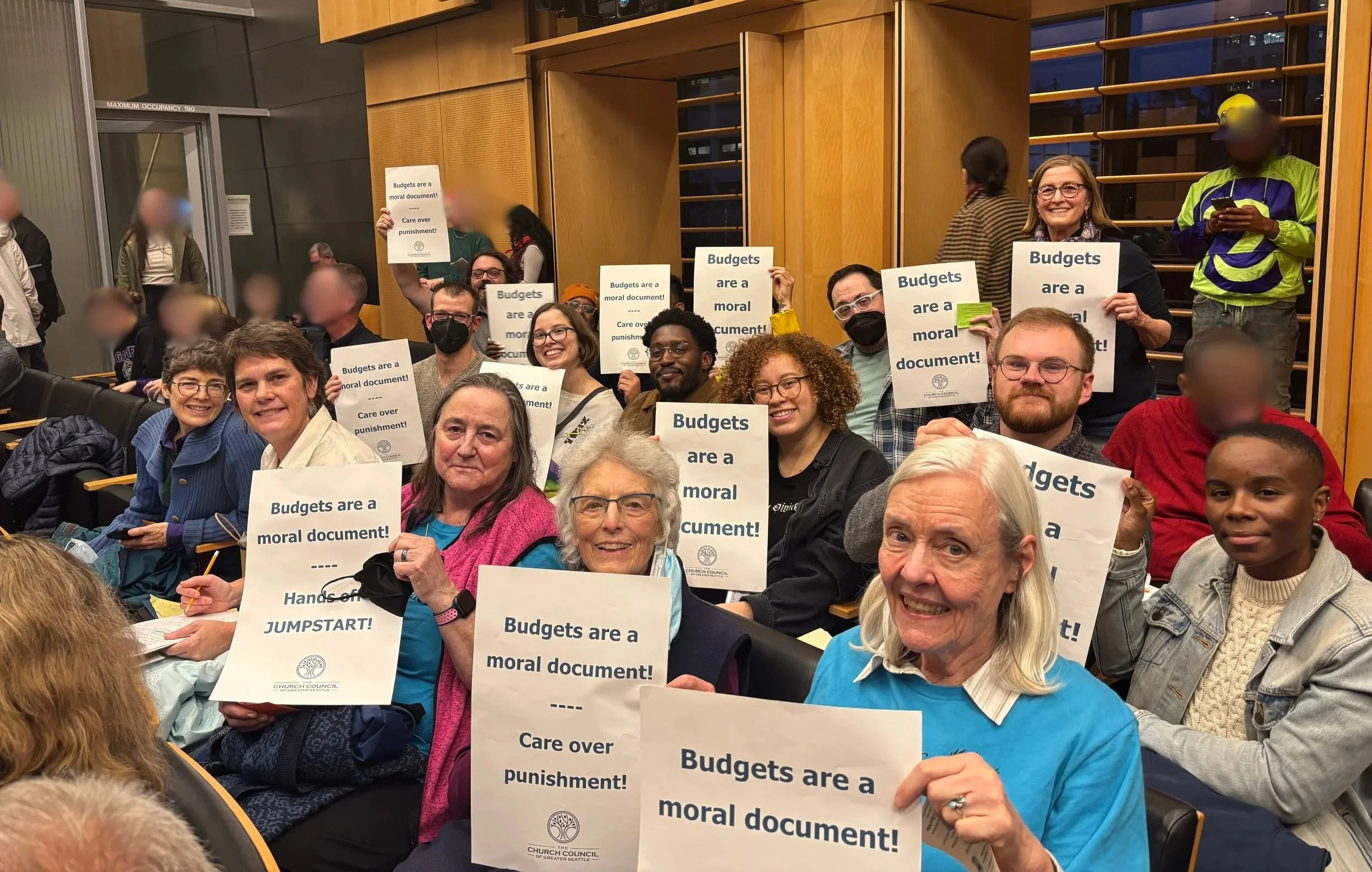
We attend every committee meeting and full council session that are open to public comment to remind our city councilmembers that budgets are a moral document and should reflect the values of community care. We partner with aligned organizations across the city, including the Seattle Solidarity Budget.
Budget Toolkit
As we head into Fall of 2026 (preparing for the 2027 budget) we will be creating our budget policy priorities. Stay tuned for a complete Budget Toolkit! We will be previewing our priorities at the Fall Fundraiser on October 25, and we’ll be hosting a Budget Forum on October 29 to prepare people of faith and conscience to give verbal and written testimony at the Public Hearing on November 5. We hope you will join us for all three!
Lectionary Guide
One way you can engage in this work is to talk about it in your faith communities. Rev. Leigh Curl-Dove and Br. Steve Jerbi have put together a Lectionary Guide for each week of the budget season - please let us know if you use it!
-
This is a day with many options. It is the feast of St. Francis of Assisi, revered for his Canticle of Creation and solidarity with the most vulnerable. It is also the last season of the Season of Creation, a suggested worship series uniting the Orthodox tradition of Creation Sunday with Catholic and Protestant churches. The theme of the Season of Creation is “Living Waters” based on Ezekiel 47:1-12. For those using the Revised Common Lectionary (appointed texts for each week), it is Lectionary 27/Proper 22, Year A.
Season of Creation:
The Ezekiel passage focuses on a river flowing from the temple that grows deeper as it flows out. The river becomes a place filled with life and the banks lined with fruit trees. Season of Creation materials focus on the call toward immersion into the healing waters of the river. It is a call to literally go deeper, and the recognize our interdependence and our call to participate in creation’s renewal. The movement in the text is from scarcity toward abundance. Wherever God’s water flows, life becomes possible.
The Seattle budget often focuses on a scarcity mentality. Services that are important to helping Seattleites thrive are some of the first cuts: Green New Deal, Housing, Community-Led Violence-Prevention. Scarcity keeps some politicians afraid of progressive revenue that hinders our city services. Funding priorities toward a ballooning police budget and surveillance comes at the cost of priorities that heal and help us flourish.
Feast of St. Francis:
Francis is often reduced to birds, animals and garden statues. He was a far more disruptive figure. Born into wealth, he gave up status and money to embrace poverty and service to those most vulnerable. He worked toward peace in the midst of violence. He started a movement around the simple imitation of Christ.
Francis saw how easily money and security can distort our relationships with God, with neighbors, and with creation. He chose solidarity with people who were poor or excluded. He understood the world was a community held together by God.
This makes Francis a strong example as we look to the city budget and ask questions about how to spend our common resources. A budget literally defines what we believe money is for and whose well-being counts. Do our shared resources create a community where people are housed, fed, cared for, and able to flourish? Where your money is there your heart shall be also (Matthew 6:21).
Revised Common Lectionary:
The texts include Isaiah 5:1-7, Philippians 3:4b-14, and Matthew 21:33-46. Both Isaiah and Matthew focus on a vineyard carefully tended and entrusted to others. They focus on stewardship, accountability, and fruitfulness. What do we do with that which we’ve been asked to steward and what are the fruits we bear?
This is a natural bridge to the city budget. Public resources are also something held in trust that need to be stewarded. What kind of city are we trying to cultivate? What is the fruit of our decisions? Are we creating conditions where people can flourish? Are we moving toward solutions for the most vulnerable, where people can be housed, where services are available, were community is prioritized? Or is our vineyard filled with a crop of bad fruit?
Br. Steve Jerbi
-
This Sunday’s lectionary texts are Isaiah 25:1-9, Psalm 23, Philippians 4:1-9 and Matthew 22:1-14. Isaiah gives us an image of God’s future for us with a feast for all people and tears wiped away. Psalm 23 gives us another table, this one in the presence of our enemies. Even the parable in the Gospel challenges assumptions of the wedding feast and who has a seat at the table.
Br. Steve Jerbi -
Matthew 22:15-22 (NRSVue)
15 Then the Pharisees went and plotted to entrap him in what he said. 16 So they sent their disciples to him, along with the Herodians, saying, “Teacher, we know that you are sincere, and teach the way of God in accordance with truth, and show deference to no one, for you do not regard people with partiality. 17 Tell us, then, what you think. Is it lawful to pay taxes to Caesar or not?” 18 But Jesus, aware of their malice, said, “Why are you putting me to the test, you hypocrites? 19 Show me the coin used for the tax.” And they brought him a denarius. 20 Then he said to them, “Whose head is this and whose title?” 21 They answered, “Caesar’s.” Then he said to them, “Give therefore to Caesar the things that are Caesar’s and to God the things that are God’s.” 22 When they heard this, they were amazed, and they left him and went away.
We all pay taxes. Our taxes should go to fund community care (housing, transportation, healthcare, schools, etc.). Often, we see our taxes within the empire we live in used for things that harm and even kill communities. As people of faith, we have an obligation to give to God what is owed to God. Meaning, we have an obligation to work for God’s kingdom fully realized here on earth. As residents of the city of Seattle, we can advocate that our tax dollars go to fund a budget that prioritizes caring for our neighbors, particularly the most vulnerable among us.
What would it mean for your community to give to God that which is God’s? Specifically, what would it mean to give to God that which is God’s in the context of Seattle’s budget cycle? What tangible actions can your congregation take to do this?
Rev. Leigh Curl-Dove -
Matthew 22:34-40 (NRSVue)
34 When the Pharisees heard that he had silenced the Sadducees, they gathered together, 35 and one of them, an expert in the law, asked him a question to test him. 36 “Teacher, which commandment in the law is the greatest?” 37 He said to him, “‘You shall love the Lord your God with all your heart and with all your soul and with all your mind.’ 38 This is the greatest and first commandment. 39 And a second is like it: ‘You shall love your neighbor as yourself.’ 40 On these two commandments hang all the Law and the Prophets.”
The two greatest commandments are to love God and love our neighbors. This is nothing new for most of us. We know that these are the two greatest commandments. We can show our love for God by our love for neighbors. But, our love for our neighbor needs to be active. Our love for neighbor cannot be abstract, it must be tangible, practical.
How does your community fulfill these two commandments? How might your community show love for neighbor during the budget cycle? Are there specific things your community would like to see in the budget that would improve the well-being of our neighbors?
Rev. Leigh Curl-Dove
-
Matthew 5:1-12 (NRSVue)
1When Jesus saw the crowds, he went up the mountain, and after he sat down, his disciples came to him. 2 And he began to speak and taught them, saying:
3 “Blessed are the poor in spirit, for theirs is the kingdom of heaven.
4 “Blessed are those who mourn, for they will be comforted.
5 “Blessed are the meek, for they will inherit the earth.
6 “Blessed are those who hunger and thirst for righteousness, for they will be filled.
7 “Blessed are the merciful, for they will receive mercy.
8 “Blessed are the pure in heart, for they will see God.
9 “Blessed are the peacemakers, for they will be called children of God.
10 “Blessed are those who are persecuted for the sake of righteousness, for theirs is the kingdom of heaven.
11 “Blessed are you when people revile you and persecute you and utter all kinds of evil against you falsely on my account. 12 Rejoice and be glad, for your reward is great in heaven, for in the same way they persecuted the prophets who were before you.When Jesus sits down to give the crowd the Sermon on the Mount and he starts it off with the Beatitudes, it was radical. The vision Jesus gives here is a vision of the world turned upside down. This is not the way of Empire. This is the way of Jesus and it is different from Empire in every way, shape, and form.
How might your community live into the world-turned-upside-down this budget season? How might your community stand in solidarity with the poor, the mourning, the hungry, the thirsty this budget season?
A risk of Matthew’s beatitudes is to move away from the physical to the spiritual. Resist this temptation! Keep the beatitudes about the real, physical needs of people. How can we tend to anyone’s spiritual needs if they are not having their physical needs met, if they are hungry and thirsty or can’t afford a safe place to live?

See you at City Hall!
Interested in joining the Budget Roundtable? Please reach out. We can't wait to hear from you!